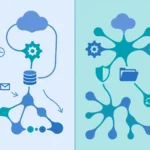

This Activepieces review looks at the open-source automation platform that wants to be the honest alternative to Zapier and Make. Its core is MIT-licensed and free to self-host, its cloud plans charge a flat monthly price plus credits, and its 2026 releases added AI agents, a built-in MCP server, and tables. The question is whether the open core is enough to offset a smaller integration library and a pricing model that changed twice in two years.
Table of Contents
What Is Activepieces?
Activepieces is a no-code workflow automation platform from San Francisco, founded by Ashraf Samhouri and Mohammad AbuAboud and backed by Y Combinator (Summer 2022). It started as an open-source Zapier replacement and now describes itself as a workspace that unifies a team’s AI: flows, agents, tables, and chat in one place, on Activepieces Cloud or on your own servers.
You build automations called flows in a visual builder: pick a trigger, add steps, branch with conditions, loop over lists, and drop in code when the no-code steps run out. Approvals, retries, and waitpoints cover the cases where a flow should pause for a human. Apps are called pieces — TypeScript packages, MIT-licensed, with more than 760 listed and over 6,500 actions across them. Anything without a piece can be reached through the HTTP piece.
The AI layer is where Activepieces has invested most in 2026. Agents take a plain-language brief and a set of tools, then reason and act across your connected apps instead of following a fixed script. A chat feature drafts a flow from a description, and every instance exposes a built-in MCP server, so Claude Desktop, Cursor, or Windsurf can call into your automations. Our Best AI Automation Tools pillar places Activepieces in the wider automation field.
Activepieces Review: Pricing in 2026
Activepieces switched its billing model in 2026, moving from per-active-flow pricing to credits. Every plan, including the free one, now includes unlimited flows. One credit covers a full flow run no matter how many steps it contains, while AI steps cost 2, 10, or 20 credits depending on the model. Paid plans can bring their own AI keys instead of paying Activepieces’ markup on AI calls. Prices below are US list prices, checked against the official pricing page in November 2026.
| Plan | Price | Credits | What you get |
|---|---|---|---|
| Free | $0 | 1,000/month | Unlimited flows, agents, tables, MCP, API access, up to 5 users |
| Plus | $20/month ($16 billed yearly) | 10,000/month | Everything in Free, bring your own AI keys, overage $0.007/credit |
| Team | $200/month ($166 billed yearly) | 50,000/month | 25 users, unlimited projects, SSO, standard roles, global connections |
| Ultimate | Custom | Custom pool | SCIM, audit logs, Git Sync, dedicated support |
| Embed | From $36,000/year | Custom | White-label automation inside your own product |

The credit maths matters more than the headline price. A plain flow run costs 1 credit whatever it does, which makes Activepieces cheap for long, multi-step workflows — the exact case where Zapier’s per-task billing and Make’s per-action billing get expensive. The trap is AI: a flow that leans on a strong model can cost 20 credits a run, so a busy agent can burn a Plus plan’s 10,000 credits faster than the flat $20 suggests. Do the maths on your heaviest flow before choosing a tier, and use bring-your-own-keys on Plus if AI is central to your setup.
Key Features
Visual flow builder. Triggers, steps, branches, loops, code, approvals, and retries, with a canvas that stays readable as flows grow. The builder is genuinely easy to learn, and reviewers score it 9.0/10 for ease of use on G2, against 8.6 for Zapier.
AI agents. Brief an agent in plain words, give it tools (piece actions, flows, MCP servers), and let it work through multi-step jobs. Agents are first-class citizens here, not a bolted-on chatbot, and they sit beside tables and chat in the same workspace.
Built-in MCP server. Activepieces both exposes and consumes Model Context Protocol servers. Your automations become callable tools for Claude or Cursor, and your agents can call out to other MCP tools. Few automation platforms have gone this far on MCP.
Self-hosting and control. The core is MIT-licensed and free to self-host with Docker or Kubernetes, including an air-gapped option. Paid cloud runs in the EU (Frankfurt), and Team and Ultimate add SSO, SCIM, audit logs, and your own secret manager.
Tables and Chat. Tables give flows a lightweight database without leaving the platform, and Chat builds a draft flow from a plain-language description. Both are included on every plan, including Free.

Pros and Cons
Pros: the most permissive license in mainstream automation — MIT core, free self-hosting, no vendor lock-in on the engine itself; one credit per flow run makes long workflows cheap; the AI layer is real and current (agents, MCP, bring-your-own-keys); a generous free plan with unlimited flows; G2 rates it 4.8/5, the highest of the automation tools tracked there.
Cons: the integration library (~760 pieces) is far smaller than Zapier’s 9,000+ apps or Make’s 3,000+, so niche apps may need the HTTP piece; pricing has changed twice in two years, and Trustpilot reviewers report being moved to new pricing without notice; independent reviews flag conflicting documentation (the pricing FAQ’s SOC 2 wording contradicts other pages) and nine security advisories in July–August 2026, one of them critical; AI steps at 2–20 credits can make the credit bill unpredictable.
Who Is Activepieces For?
Activepieces fits teams that want control: open-source shops, privacy-conscious companies, and builders who self-host to keep data in-house. It also fits anyone whose workflows are long — a 20-step flow costs the same single credit as a 2-step one, which is a genuine saving against per-task rivals. If that sounds like your team, this Activepieces review suggests starting on the free plan and measuring your real credit burn, especially on AI steps, before paying.
It is a weaker fit if you need the widest possible app catalog out of the box, or if you want pricing that never moves. A visual-first team that lives in the cloud and never touches a server will likely be happier with Make, while a technical team that wants code steps and per-execution billing should read our n8n review first. For the self-hosting question specifically, our n8n vs Make comparison covers the same trade-off from the other side.
Verdict
Our Activepieces review verdict: Activepieces is the most honest pricing model in workflow automation for long flows, and the only mainstream option with a truly open core. The AI agents and MCP support are genuinely current, and the free plan is generous enough to test properly. The smaller catalog and the shifting pricing are real drawbacks, so verify your must-have integrations and do the credit maths on AI-heavy flows before committing. Rating: 4.2/5.
FAQ
How much does Activepieces cost?
Free is $0 with 1,000 credits a month. Plus is $20 a month ($16 billed yearly) with 10,000 credits. Team is $200 a month ($166 billed yearly) with 50,000 credits. Ultimate is custom, and Embed starts at $36,000 a year.
What is an Activepieces credit?
One credit covers a full flow run regardless of how many steps it contains. AI steps cost extra: 2, 10, or 20 credits depending on the model. Overage on paid plans is $0.007 per credit.
Is Activepieces really open source?
The core is MIT-licensed and free to self-host. Enterprise and cloud features live in separate folders under a commercial license, so self-hosted users who want those features need to buy them.
Does Activepieces have an affiliate program?
We could not verify an official Activepieces affiliate program in November 2026. One affiliate directory lists an unverified $17 figure, and independent reviewers report no publisher affiliate relationship with the company. We are not enrolled, so this article has no affiliate links. Try Activepieces at activepieces.com.
Sources
Activepieces official pricing page and documentation; independent reviews by Software Lifecycle, The AI Directory, and Javis Review (October 2026); G2 and Trustpilot ratings as cited in those reviews.