

SpaceX Starmind took a giant step toward reality on November 25, 2026, when the Federal Communications Commission authorized SpaceX to deploy up to one million satellites designed to work as data centers in orbit. The decision, announced the day before Thanksgiving, is the first authorization in United States history for a constellation of data centers in space, and it turns one of Elon Musk’s boldest ideas into a licensed, if still unproven, project.
The approval does not mean a million satellites are about to appear overhead. No Starmind satellite has launched yet, and SpaceX has until 2033 to put the first one into operation. But the FCC’s order gives the company a legal runway to build what could become the largest computing project ever attempted, one that moves the AI industry’s hunger for power and cooling off the planet entirely.
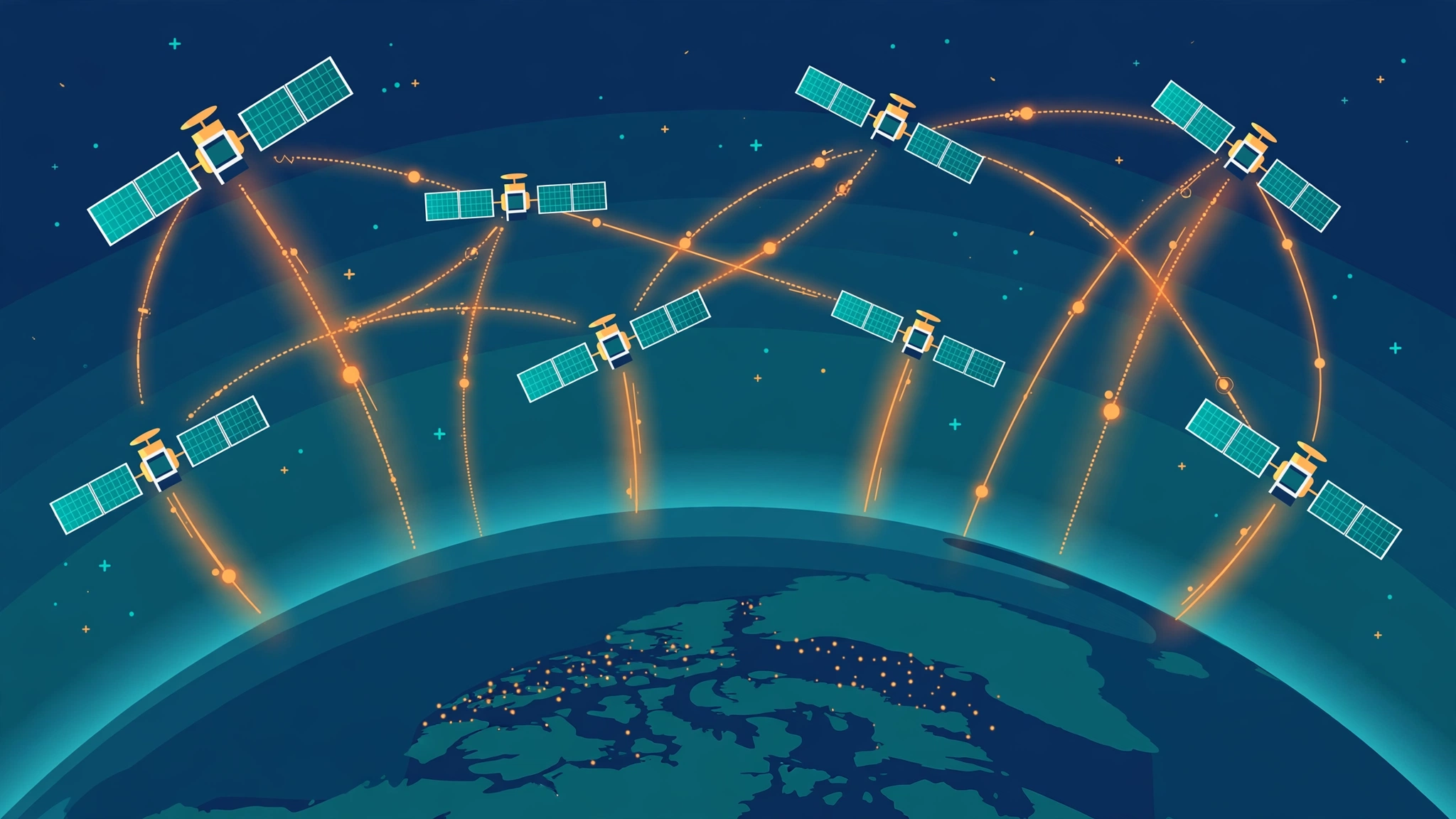
Table of Contents
Why SpaceX Starmind Exists
The idea behind the network is simple to state and hard to execute. Modern AI models need enormous amounts of computing power, and the data centers that provide it need enormous amounts of electricity and cooling. SpaceX argues that orbit solves both problems at once: sunlight is available almost continuously above the atmosphere, and the cold of space offers a place to dump heat.
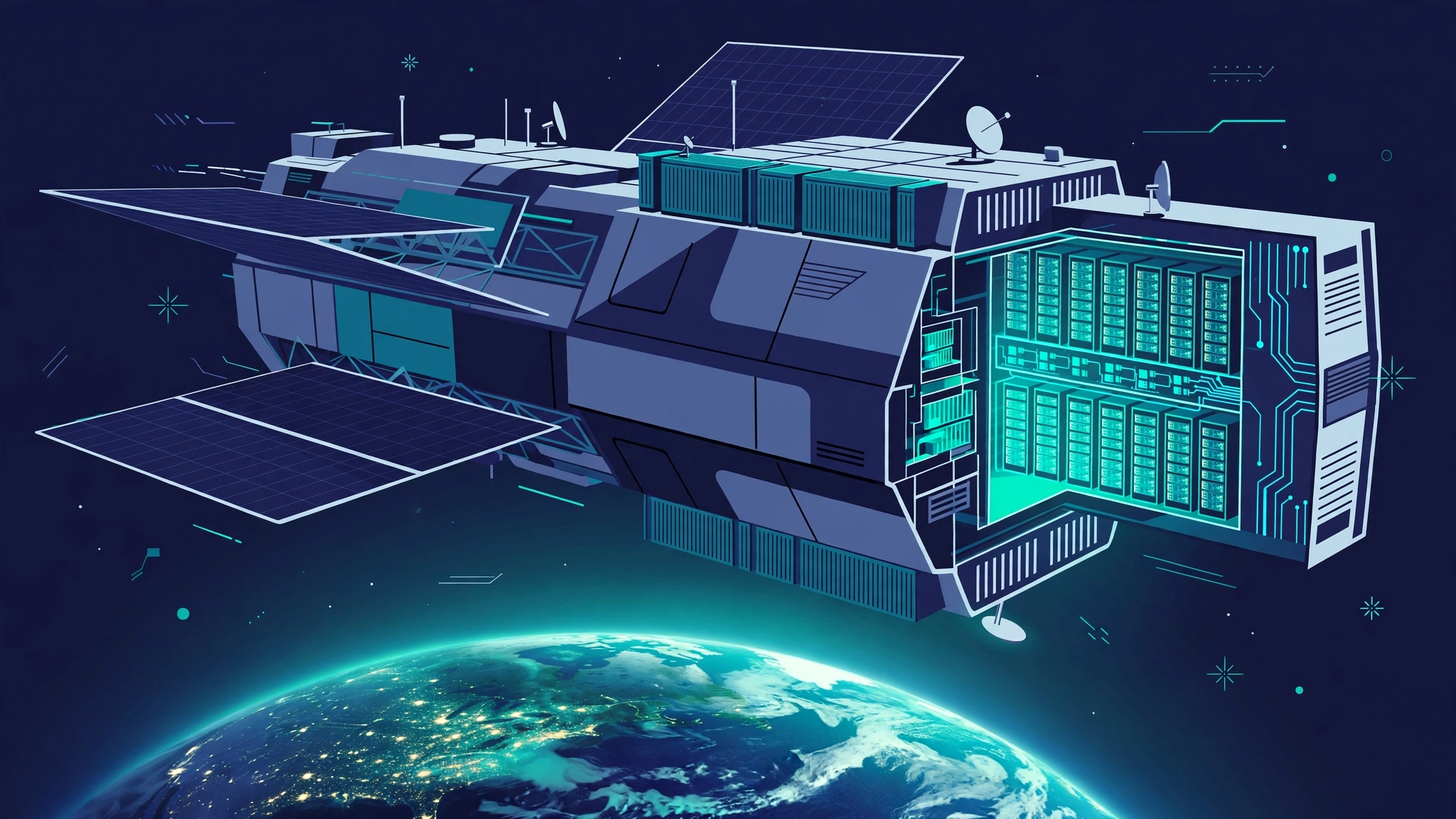
SpaceX describes the concept as capturing solar energy in space to power low-cost, high-performance AI compute for Earth. Each satellite would process AI workloads in orbit and send the results back down, rather than simply relaying internet traffic the way the company’s Starlink broadband satellites do. The satellites would be linked to one another by high-bandwidth optical connections, effectively forming a distributed computer the size of a constellation.
The timing matters. Demand for AI computing has grown faster than the power grid in many regions can support, and data center construction on Earth now runs into familiar limits: land, permits, water for cooling, and access to electricity. Moving even part of that load into orbit would sidestep all four at once, if the engineering works.
What the FCC Actually Approved
The FCC authorized the SpaceX Starmind constellation to help meet rapidly growing demand for AI computing, in the agency’s own framing of the decision. SpaceX filed its petition for the constellation on January 30, 2026, about ten months before the approval arrived.
The authorization covers satellites operating in orbital shells between 500 and 1,002 kilometers in altitude, at 30-degree and sun-synchronous inclinations. According to SpaceX, each satellite would have a wingspan of 75 meters and a deployed height of 30 meters, making each unit roughly the size of a small building once unfolded.
The satellites will communicate with one another over optical links. The FCC also granted SpaceX the ability to use Ka-band radio frequencies for telemetry, tracking and command, but only as a backup in the event the optical links fail. That narrow permission mattered: it helped address interference concerns raised by Viasat, Amazon Leo and the American Astronomical Society, whose petitions to deny the application the FCC rejected.
The approval came with conditions. SpaceX must provide communications backups, file regular updates with the FCC, and submit a detailed plan for orbital debris mitigation. The company is manufacturing the Starmind spacecraft in partnership with Nvidia, whose chips are expected to power the onboard computing.
“Compute campuses or data centers are essential to sustaining America’s leadership in [artificial intelligence]. By moving compute capacity beyond Earth, SpaceX and the many competitors working on their own orbital data centers are meeting the moment.”
— Brendan Carr, Chair of the Federal Communications Commission
The Timeline: From Approval to Orbit
SpaceX has a long runway, and the FCC’s milestones are spread across the next fourteen years. The first operational satellite must be deployed by November 25, 2033. The company must then have 10 percent of the constellation, or 100,000 satellites, in orbit by November 2035, half of it by November 2038, and the full constellation by November 2040.
Musk has suggested a faster pace in public remarks. Speaking at an event hosted by Baron Capital, he said he anticipates the first of these spacecraft launching in the third quarter of 2027. SpaceX Chief Financial Officer Bret Johnsen said last week that the company plans to launch its first data centers into space in 2027 and expand its presence through 2029, with broader deployment potentially beginning as early as 2028.
The gap between the company’s ambitions and the FCC’s deadlines is the point. Regulators set the outer limit; SpaceX’s own schedule is far more aggressive. Whether either timeline holds will depend on manufacturing, launch capacity and, above all, whether the first orbital data centers can prove their economics against Earth-based alternatives.
| Fact | Detail |
|---|---|
| Authorization | FCC approval, November 25, 2026 |
| Constellation size | Up to 1 million satellites |
| Altitude | 500 to 1,002 km |
| Satellite size | 75 m wingspan, 30 m deployed height |
| Power source | Solar energy in orbit |
| First satellite deadline | November 25, 2033 |
| Full constellation deadline | November 25, 2040 |
| Manufacturing partner | Nvidia |
The Skeptics Are Not Convinced
Not everyone is celebrating. Scientists have questioned the economics and the engineering, particularly how satellites would shed the heat generated by computer chips in the vacuum of space, where there is no air to carry heat away. Space debris is another concern: a million satellites would multiply the number of objects in low Earth orbit many times over, raising collision risks for everything else up there.
Astronomers are worried too. The American Astronomical Society said it was “disheartened and dismayed” by the decision, calling the constellation at odds with a spirit of cooperation and goodwill. SpaceX already operates just over 11,000 Starlink satellites, one of the largest constellations ever assembled, and the proposed network would increase the total number of satellites in Earth orbit by roughly fifty-fold, according to Gizmodo.
The FCC argued in its order that concerns about optical astronomy were sufficiently addressed in the company’s application and supplemental material. It also maintained that the constellation operates consistently with its orbital debris rules. The FCC did not approve every part of the proposal: it declined a waiver that would have let satellites above 600 kilometers move into so-called graveyard orbits at the end of their lives instead of being brought down to burn up in the atmosphere.
There is also the question of competition. The FCC said it is continuing to review additional orbital data center proposals from other companies, including Google and Blue Origin, and intends to issue decisions on each according to its regular procedures. Orbital computing may become a race, not a monopoly.
What It Means for AI Infrastructure
If the network works as described, it would change where AI computing happens and who can afford it. Cheap solar power in orbit could, in theory, undercut the cost of land-based data centers, and the sheer scale of a million satellites would dwarf any single facility on Earth. That is the promise that convinced the FCC to call the decision historic.
For now, though, the filing is best read as a permission slip, not a product. SpaceX Starmind exists only on paper for now, and the hard problems, heat, debris, cost and astronomy, are unsolved. Watch the first demonstration flight in 2027. That is the moment this story turns from a license into a business.
Still, the direction of travel is clear. AI infrastructure has officially entered the space race, and regulators have now blessed the idea. The next question is whether physics and economics will cooperate.
Frequently Asked Questions
How many satellites did the FCC approve for the orbital data center network?
The FCC authorized SpaceX to deploy up to one million satellites for the Starmind constellation, the first US authorization for a constellation of data centers in space.
When will the first orbital data center satellite launch?
Elon Musk has said he anticipates the first spacecraft launching in the third quarter of 2027, while the FCC requires the first operational satellite by November 2033 and the full constellation by 2040.
Why put AI data centers in space at all?
SpaceX argues that orbit offers near-continuous solar power and a way around the land, electricity and cooling limits that constrain data centers on Earth. Scientists remain skeptical about heat dissipation, debris and cost.
Verdict
The FCC’s approval is a genuine milestone: the United States has now licensed AI computing in orbit. But the network exists only on paper, and the hard problems, heat, debris, cost and astronomy, are unsolved. Watch the first demonstration flight in 2027. That is the moment this story turns from a license into a business.
Sources
- Reuters — US authorizes SpaceX to deploy 1 million satellites for data centers in space
- GeekWire — FCC clears SpaceX to put a million data center satellites in orbit
- Spaceflight Now — FCC green lights SpaceX’s plan to launch 1 million ‘Starmind’ data center satellites
- Gizmodo — FCC Approves SpaceX’s Plan to Deploy 1 Million Satellites to Orbit
- The Neuron — Everything That Happened in AI Today, November 26, 2026
For more on the infrastructure race behind AI, see our coverage of AI chip export controls and our AI News November 24 roundup.