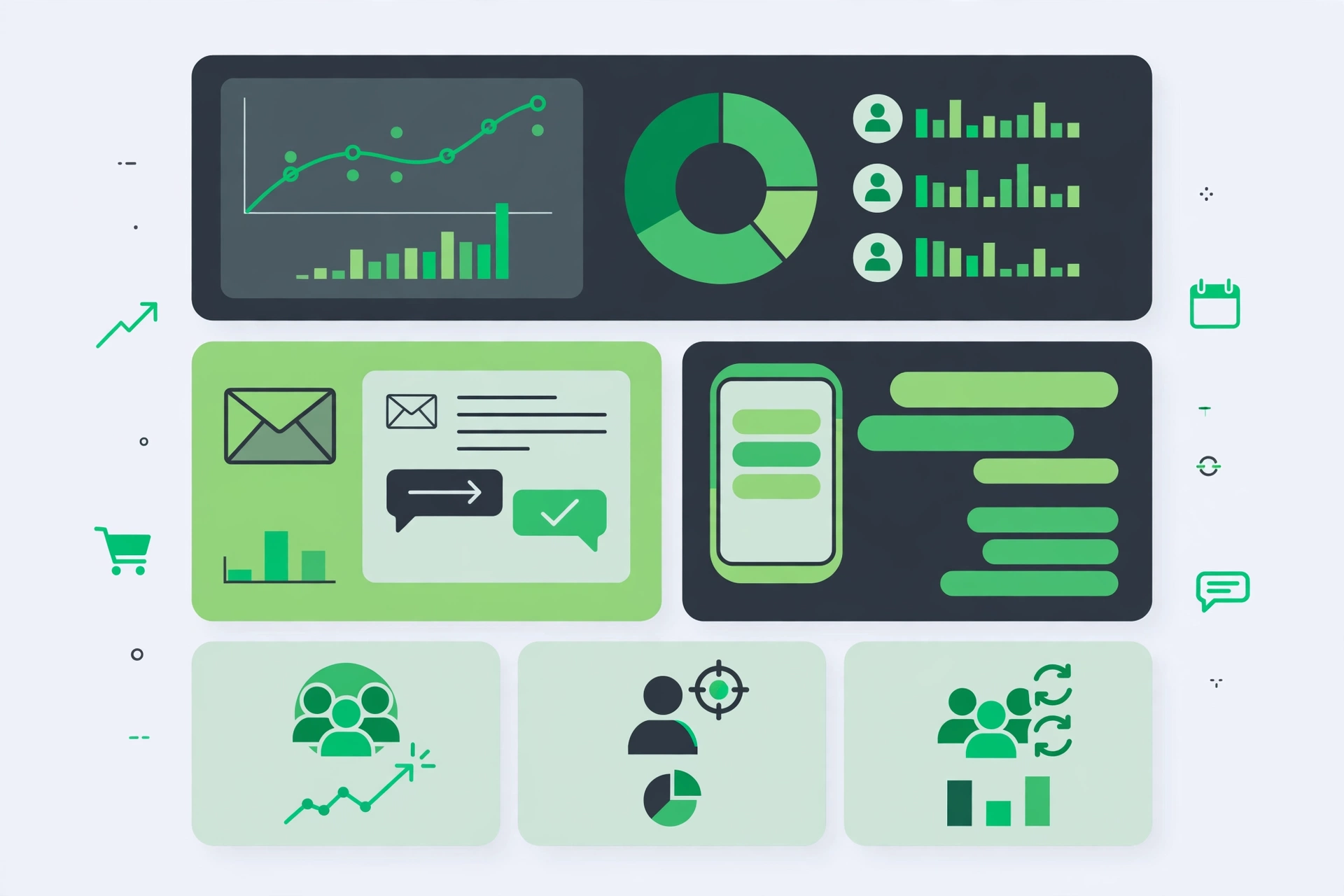

This Klaviyo review looks at the ecommerce email and SMS platform that has become the default choice for Shopify and WooCommerce stores in 2026. Klaviyo combines email marketing, SMS, and customer data in one place, so online stores can send the right message to the right customer at the right time. In this article, we break down what Klaviyo does, what it costs, where it shines, and where it falls short, so you can decide whether it deserves a place in your marketing stack.
Table of Contents
What Is Klaviyo?
Klaviyo is a B2C CRM and marketing automation platform built specifically for ecommerce. Founded in 2012 and publicly listed on the New York Stock Exchange since 2023, Klaviyo serves more than 200,000 brands worldwide, from small Shopify stores to large direct-to-consumer (DTC) businesses. Unlike general email tools that treat every subscriber the same, Klaviyo builds a rich profile for each customer from store behavior: what they viewed, what they added to cart, what they bought, and how much they are likely to spend next.
Every interaction becomes an event that can trigger a message or define a segment. That data-first design is the reason Klaviyo is so popular with ecommerce brands. It connects natively with Shopify, BigCommerce, WooCommerce, and Magento, syncing orders, products, and customer behavior in real time. For a broader look at the category, see our guide to the Best AI Email Marketing Tools.
Klaviyo Review: Key Features
Klaviyo packs a deep feature set, but four areas matter most for store owners: automated flows, segmentation and predictive analytics, multi-channel messaging, and revenue reporting.
Flows: Automated Sequences That Sell While You Sleep
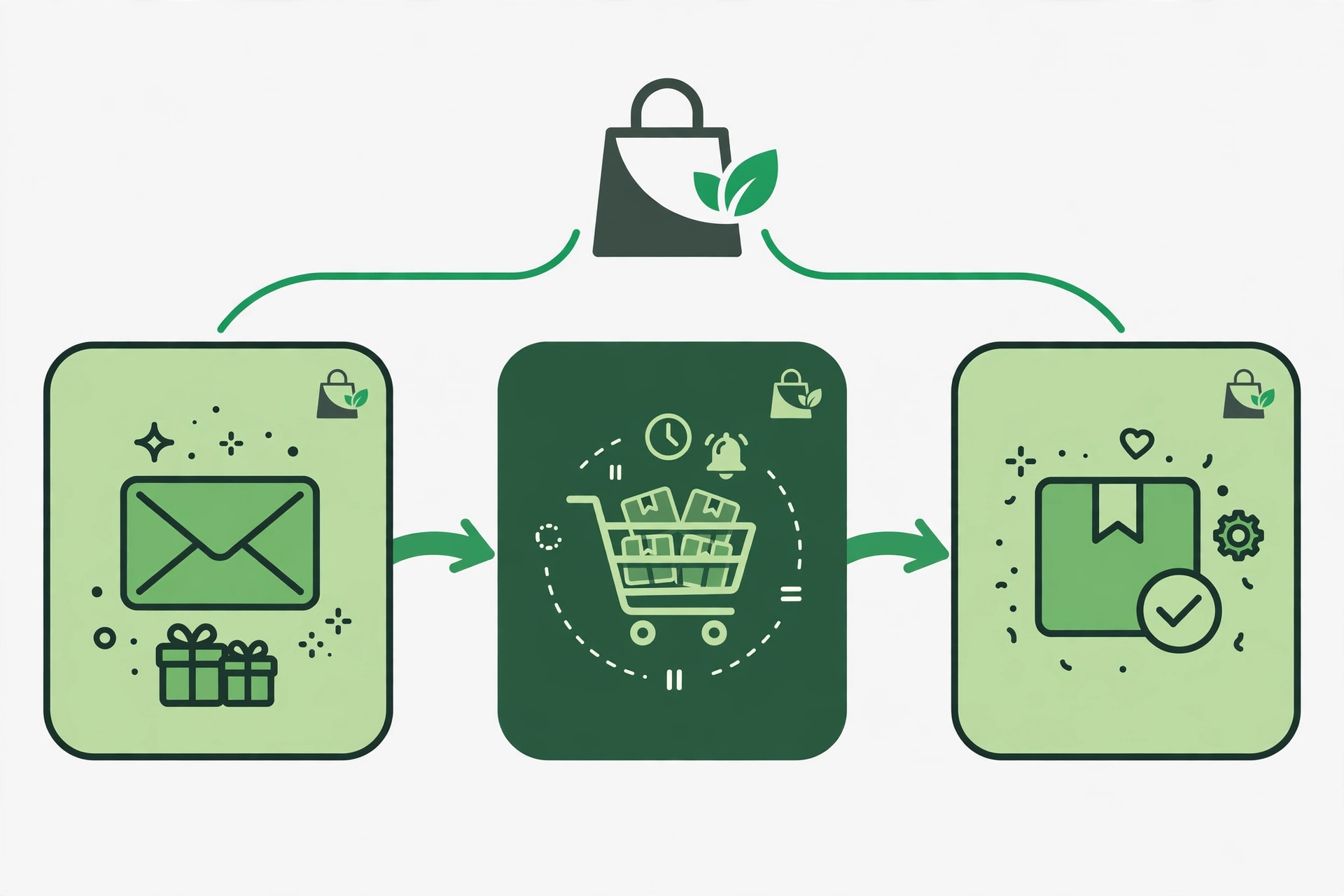
Klaviyo calls its automations “Flows,” and they are the main reason stores choose the platform. The visual flow builder lets you create trigger-based sequences without code: a welcome series for new subscribers, an abandoned cart reminder, a browse abandonment nudge, a post-purchase follow-up, a win-back series for lapsed buyers, and a back-in-stock alert. Each flow supports conditional splits, delays, and timing recommendations based on aggregate data from thousands of stores.
The results explain the hype. According to Klaviyo’s own 2026 benchmark data, flows generate nearly 41% of total email revenue from just 5.3% of sends, and revenue per recipient from flows is almost 18 times higher than from one-off campaigns.
Segmentation and Predictive Analytics
Segmentation is where Klaviyo outclasses most competitors. You can build unlimited segments from any combination of events, profile properties, and predicted behavior: customers who bought twice in the last 60 days, browsers who viewed a product three times without purchasing, or subscribers predicted to churn. Predictive analytics adds predicted customer lifetime value, churn risk, and an expected next order date for each customer, retrained at least weekly once an account has enough order history.
These predictions let you treat customers differently based on their future value, not just their past orders: high-value customers can get early access to a launch, while a churn-risk segment gets a win-back offer before it is too late.
Email, SMS, and More From One Profile
Klaviyo runs email and SMS from the same customer profile, the same segmentation engine, and the same automation builder. A single flow can send an email, wait two days, then send an SMS only if the email was not opened. SMS is priced by credits, at roughly $0.01 to $0.015 per SMS in the United States, with MMS costing more. Two-way messaging lets customers reply, and the platform also supports push notifications, WhatsApp, and RCS in supported regions.
AI Tools and Revenue Reporting
Klaviyo’s built-in AI writes subject lines, generates email copy, and suggests segments. Smart Send Time predicts each recipient’s best hour to receive an email. On the reporting side, Klaviyo attributes revenue at the email, flow, campaign, and segment level, so you can see exactly which messages earned money and which ones did not.
Klaviyo Pricing in 2026
Klaviyo bills by active profiles, meaning every contact in your database who can receive marketing, not by how many emails you send. This changed in February 2025, so list hygiene now affects your bill directly. There are no per-seat charges, so your whole team can use the account at the same price. Prices below are US list prices on monthly billing, verified against Klaviyo’s pricing page in October 2026. Always confirm the current figures at klaviyo.com/pricing before signing up.
| Plan | Starting Price | Active Profiles | Monthly Email Sends | SMS Credits |
|---|---|---|---|---|
| Free | $0 | Up to 250 | 500 | 150 SMS credits |
| $20/month | 251-500 | 5,000 | 150 SMS credits included | |
| Email + SMS | $35/month | 251-500 | 5,000 | 1,250 SMS/MMS credits |
Costs rise with each profile band: at 1,000 profiles the Email plan is about $30 per month and Email + SMS about $45; at 5,000 profiles, about $100 and $115; at 10,000 profiles, about $150 and $165; and at 50,000 profiles, email alone reaches roughly $720 per month. Klaviyo automatically moves you to the next tier when your profile count crosses a band, and extra SMS credits are billed per message by destination country. The free plan includes email support for the first 60 days only, and there is no annual discount on self-serve plans.
Klaviyo Pros and Cons
No tool is perfect, and Klaviyo’s trade-offs are well documented by its users. On G2, Klaviyo scores 4.6 out of 5 from more than 1,370 reviews, and on Capterra it also scores 4.6 out of 5 from over 520 reviews.
Pros
- Deepest ecommerce integration in its class: native Shopify, WooCommerce, BigCommerce, and Magento sync turns store behavior into targeting data in real time.
- Powerful flows and segmentation: pre-built ecommerce flows and unlimited segments based on behavior and predicted value drive outsized revenue per send.
- Predictive analytics included: predicted lifetime value, churn risk, and next order date help you prioritize the customers who matter most.
- Unified email and SMS: one profile, one automation builder, and one reporting view across channels, instead of two disconnected tools.
- Clear revenue attribution: you can trace orders and revenue back to individual emails, flows, and segments.
Cons
- Costs climb fast as your list grows: billing on all active profiles means every stored contact costs money, even if you never email them, and pricing is the top complaint in user reviews.
- Free plan is very limited: 250 profiles and 500 sends per month is enough to test the platform, not to run a real store.
- Steep learning curve: the depth that makes Klaviyo powerful also makes it intimidating for beginners, and setup can take weeks for a new store.
- Support quality is mixed: users report uneven experiences with support, especially on lower-tier plans after the 60-day email support window on the free plan.
- Not for every business: Klaviyo is built for ecommerce, so pure newsletter senders and non-retail businesses will find cheaper, simpler options, and its acceptable use policy bars some categories such as prescription and telehealth offers. If you mainly send newsletters, compare it with our Mailchimp review before deciding.
Who Is Klaviyo Best For?
Klaviyo is best for ecommerce stores that already generate steady sales and want to grow repeat revenue through email and SMS. If you sell on Shopify or WooCommerce, run regular promotions, and have at least a few hundred customers, Klaviyo’s flows and segmentation will usually pay for themselves through recovered carts and repeat purchases.
It is a weaker fit for brand-new stores with tiny lists, for businesses that only send a monthly newsletter, and for non-ecommerce companies. In those cases, a simpler and cheaper tool is often the smarter starting point. Our head-to-head Mailchimp vs Klaviyo comparison breaks down exactly where each platform wins.

Frequently Asked Questions
Is Klaviyo free?
Yes, Klaviyo has a free plan for up to 250 active profiles with 500 email sends per month and 150 SMS credits. It is useful for testing the platform and its flows, but most real stores outgrow it quickly and move to the paid Email plan from $20 per month.
How much does Klaviyo cost for 1,000 contacts?
At 1,000 active profiles, the Email plan costs about $30 per month and the Email + SMS plan about $45 per month, based on Klaviyo’s published pricing bands for 2026. SMS usage beyond the included credits is billed separately by destination country.
Does this Klaviyo review recommend Klaviyo for small stores?
It depends on your sales volume. If your store already earns consistent revenue and you can use abandoned cart and welcome flows, Klaviyo usually earns back its cost quickly. If you have fewer than 250 subscribers and no sales yet, start on the free plan and upgrade when your list and revenue grow.
Is Klaviyo better than Mailchimp?
For ecommerce stores, yes, in most cases. Klaviyo’s segmentation runs on purchase and browsing data, its flows are built around the ecommerce lifecycle, and it includes native SMS and predictive analytics. Mailchimp is simpler and cheaper for newsletters and non-ecommerce senders.
Our Verdict
Overall, this Klaviyo review finds Klaviyo to be the strongest ecommerce email and SMS platform available in 2026, with one clear condition: your store needs enough revenue to justify its price. Its flows, segmentation, predictive analytics, and revenue attribution are genuinely best in class for online stores, and its Shopify integration remains unmatched. The downsides are real, though. Costs scale with every profile on your list, the learning curve is steep, and support can be hit or miss.
If you run an ecommerce store and email is a serious revenue channel for you, Klaviyo is worth every dollar. If you are just starting out or only send occasional newsletters, start free and upgrade when your store earns it. Rating: 4.4/5 — excellent for ecommerce email and SMS, held back by pricing that climbs fast as your list grows.