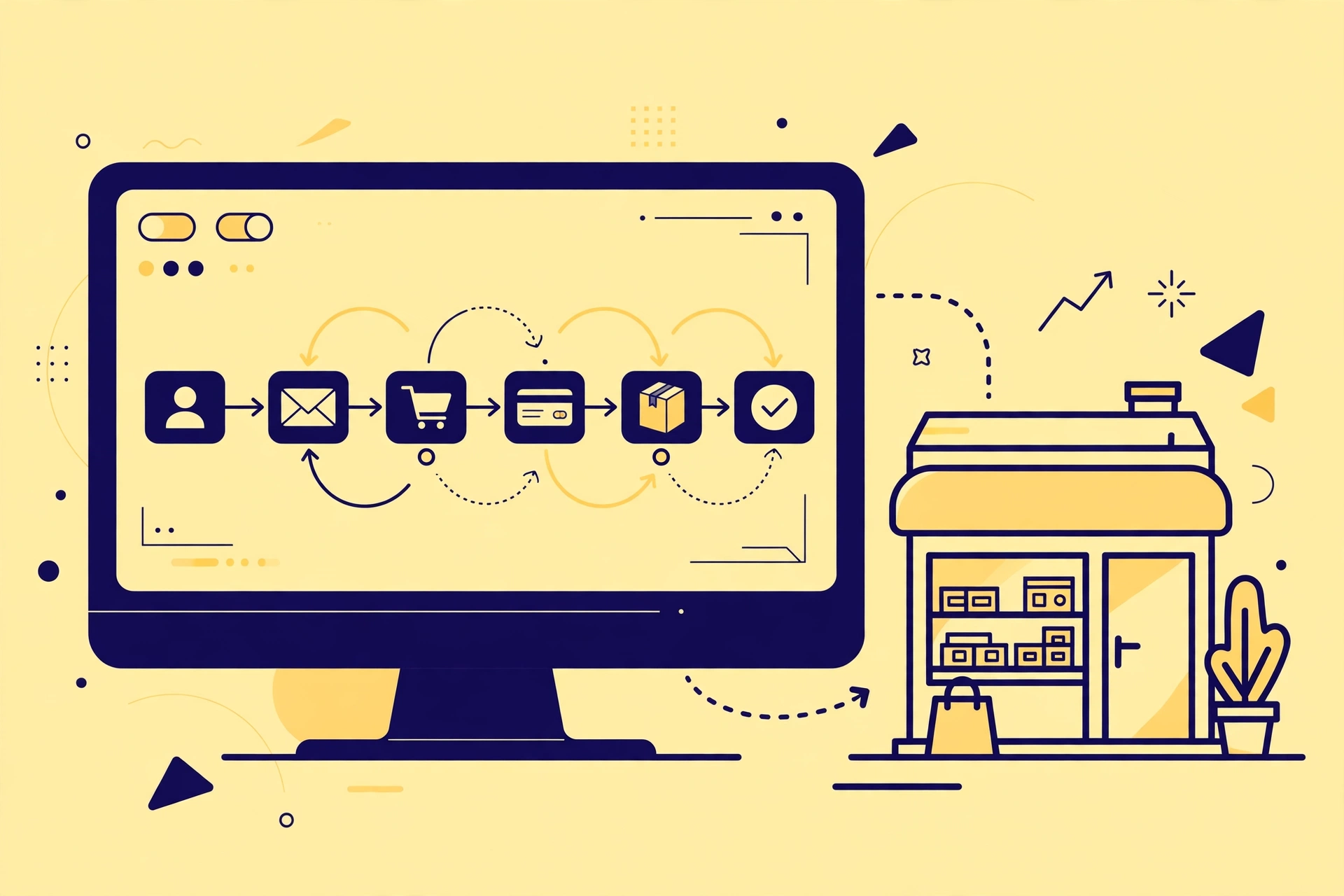

Mailchimp vs Klaviyo is the classic email marketing decision for growing businesses, and it is really a question about what your business sells. Mailchimp is the friendly all-rounder: newsletters, landing pages, and simple automations for any kind of business. Klaviyo is the ecommerce specialist: email and SMS driven by purchase behavior, built for stores on Shopify, WooCommerce, and BigCommerce.
Table of Contents
What Mailchimp and Klaviyo Actually Do
Mailchimp is the tool most small businesses meet first. It combines email campaigns with landing pages, signup forms, a website builder, and a large template library, and its editor is famously easy to pick up. It can run abandoned-cart emails for a Shopify store and handle newsletters, announcements, and simple drip sequences without a learning curve. The trade-off is depth: advanced segmentation, predictive analytics, and multivariate testing sit behind the $350-per-month Premium tier.
Klaviyo is built the other way around. Everything starts from ecommerce data: what a customer bought, browsed, or abandoned, and when. That data drives segmentation, flows, and predictive analytics — including predicted lifetime value and churn risk — on the base paid plan, not a top tier. Klaviyo also adds native SMS, so email and text live in one automation instead of two tools. The trade-off is a steeper learning curve and a price that climbs steadily as your list grows.
Mailchimp vs Klaviyo: Pricing by List Size
Both vendors price by contact count, and both cut their free plans to 250 contacts in recent years. Mailchimp’s free plan covers 250 contacts and 500 sends a month; Klaviyo’s covers 250 active profiles, 500 emails a month, and a small SMS allowance. On paid plans, Mailchimp Essentials starts at $13 a month for 500 contacts with a 10x send allowance, Standard at $20 with a 12x allowance, and Premium at $350 with a 15x allowance. Klaviyo’s Email plan starts at $20 a month for 500 profiles, and Email + SMS at $35.
| List size | Klaviyo Email | Mailchimp Essentials | Mailchimp Standard |
|---|---|---|---|
| 500 contacts | $20/month | $13/month | $20/month |
| 1,000 contacts | $30/month | ~$27/month | ~$40/month |
| 5,000 contacts | $100/month | $75/month | $100/month |
| 10,000 contacts | $150/month | $110/month | $135/month |
| 25,000 contacts | ~$400/month | ~$270/month | ~$310/month |
Two billing details matter more than the sticker prices. Mailchimp counts unsubscribed contacts toward your billing limit and does not merge duplicates across audiences, so a list that looks like 10,000 in your CRM can bill at 12,000 or more. Klaviyo bills on active profiles only, so suppressed profiles do not count. Mailchimp also advertises a 50% discount for the first 12 months, which effectively doubles your bill in month 13. Prices checked November 2026 — confirm in each vendor’s pricing calculator before you commit.
Automation and Segmentation
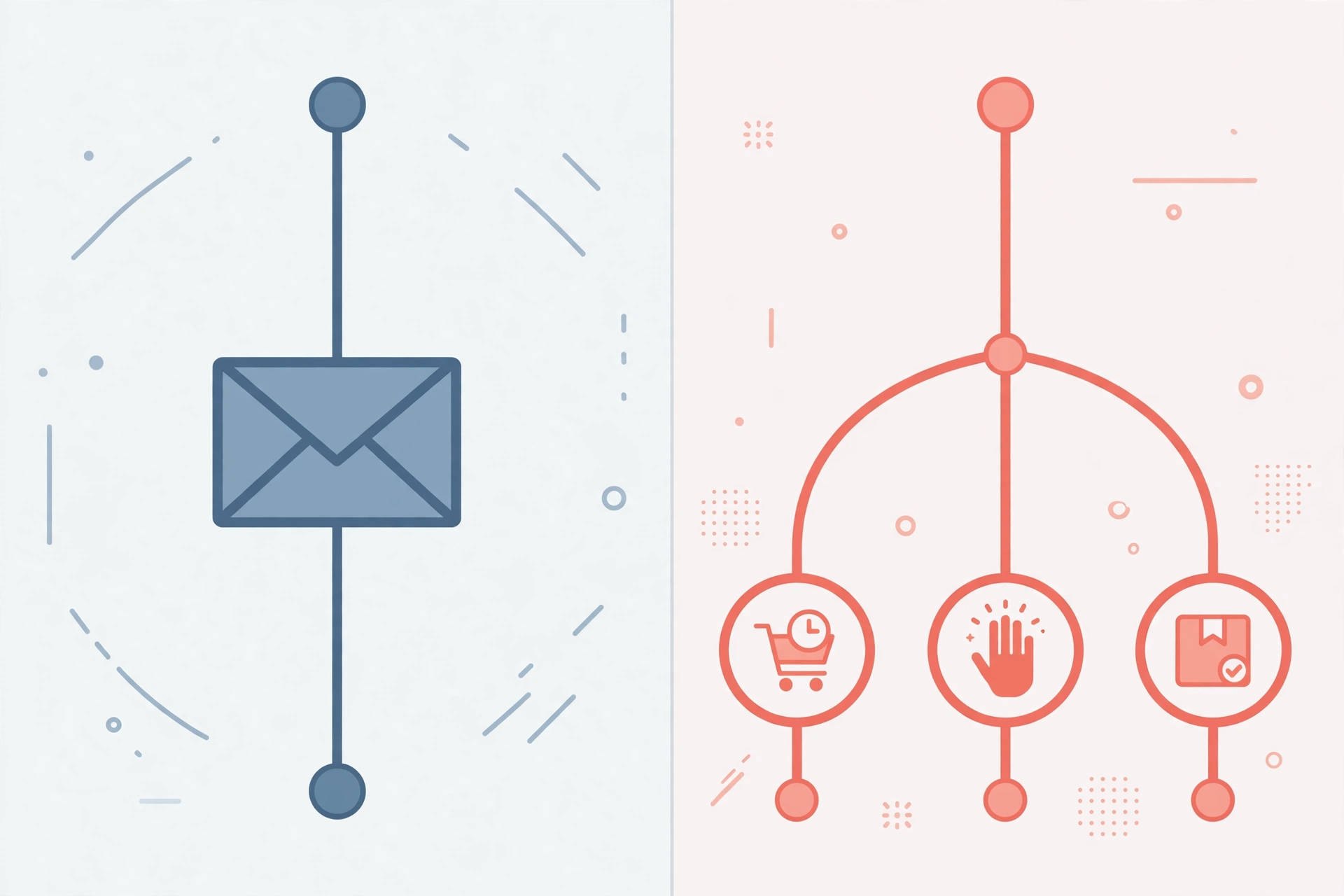
This is where the two tools genuinely diverge. Klaviyo includes predictive analytics and deep behavioral segmentation on its base paid plan, and its flows react to purchase events in real time: browse abandonment, post-purchase follow-ups, win-back sequences, and replenishment reminders. Mailchimp’s Essentials plan limits automations to 4 steps, and predictive segmentation only arrives with Standard or Premium. For a store, that gap is the whole decision; for a newsletter, it barely matters.
SMS and Multichannel
Klaviyo bundles SMS as an add-on to its Email plan rather than a separate product. In July 2026 it moved to dollar-based SMS pricing, and every account gets $5 of mobile messages a month included. Mailchimp has no native SMS as of October 2026, so texting means a third-party integration and a second bill. If SMS is part of your plan within the next year, Klaviyo is the simpler buy.

Ease of Use and Integrations
Mailchimp is the easier tool to start with: a gentler learning curve, more templates, and one of the largest integration marketplaces in the category. Klaviyo takes longer to set up well, because its power comes from data — the Shopify and WooCommerce integrations feed purchase history, product catalogs, and on-site behavior into every segment and flow. Klaviyo also attributes revenue to each email, so you can see exactly what a campaign earned. If email is one channel among many for your business, our Smartlead review and our Smartlead vs Instantly comparison cover the cold-email side of the stack, and our best AI marketing tools for agencies roundup puts email in the wider marketing picture.
Frequently Asked Questions
Mailchimp vs Klaviyo: which is cheaper at 5,000 contacts?
At 5,000 contacts, Klaviyo Email and Mailchimp Standard both cost about $100 a month. Mailchimp Essentials is cheaper at $75, but it limits automations to 4 steps and holds back predictive features.
Can Mailchimp run abandoned cart emails?
Yes. Mailchimp supports abandoned-cart flows on paid plans through its ecommerce integrations, including Shopify. It works — it just does not segment and predict around purchase behavior the way Klaviyo does.
Do I need Klaviyo if I do not sell online?
Probably not. Klaviyo’s advantage is purchase data. For newsletters, creators, and service businesses, Mailchimp is cheaper at small list sizes and easier to run day to day.
Verdict
Mailchimp vs Klaviyo comes down to what your business sells. Choose Mailchimp if you run a newsletter, a service business, or a small list you email often and want the simplest tool at the lowest starting price. Choose Klaviyo if you run an online store and email revenue matters — its purchase-driven segmentation, native SMS, and revenue attribution pay for the higher price once your list grows.