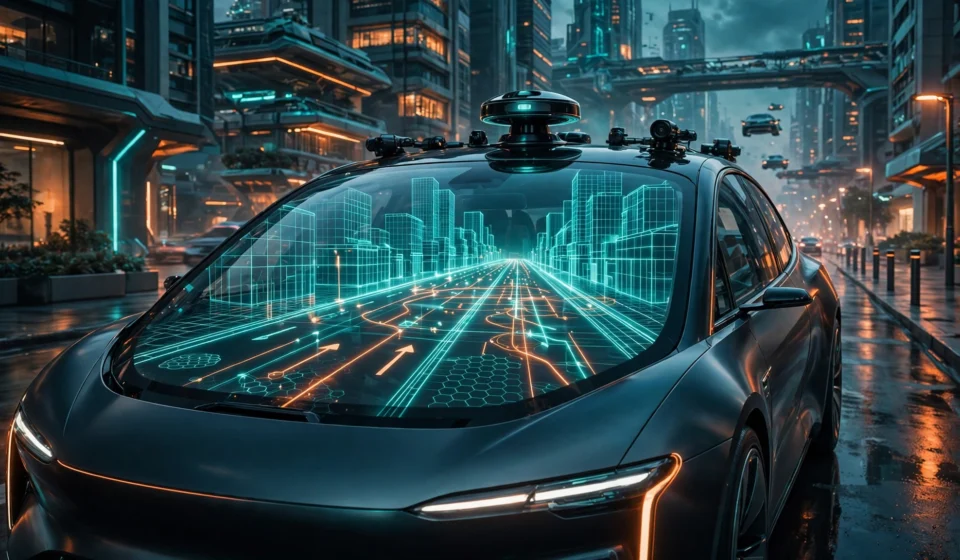

Tesla FSD v15 is the most ambitious Full Self-Driving update Tesla has shipped in years, and it starts with the screen. The rollout began on November 21, 2026, to a first wave of owners, bringing a new vision encoder, a claimed 25-times improvement in handling safety-critical cases, and a feature called Reality View that re-renders the world outside the car in real time.
The stakes are higher than a software update. Full Self-Driving is the technology Tesla’s autonomy bet rests on, from consumer cars to the Robotaxi fleet in Austin, and chief executive Elon Musk said in April that v15 “will far exceed human levels of safety, even in completely unsupervised and complex situations.” He has said similar things about v12 and v14. This time, the release notes read like a direct answer to every complaint owners and regulators have made about the system — misread speed limits, potholes, school zones, debris — which is exactly why the update deserves a close look rather than a cheer.
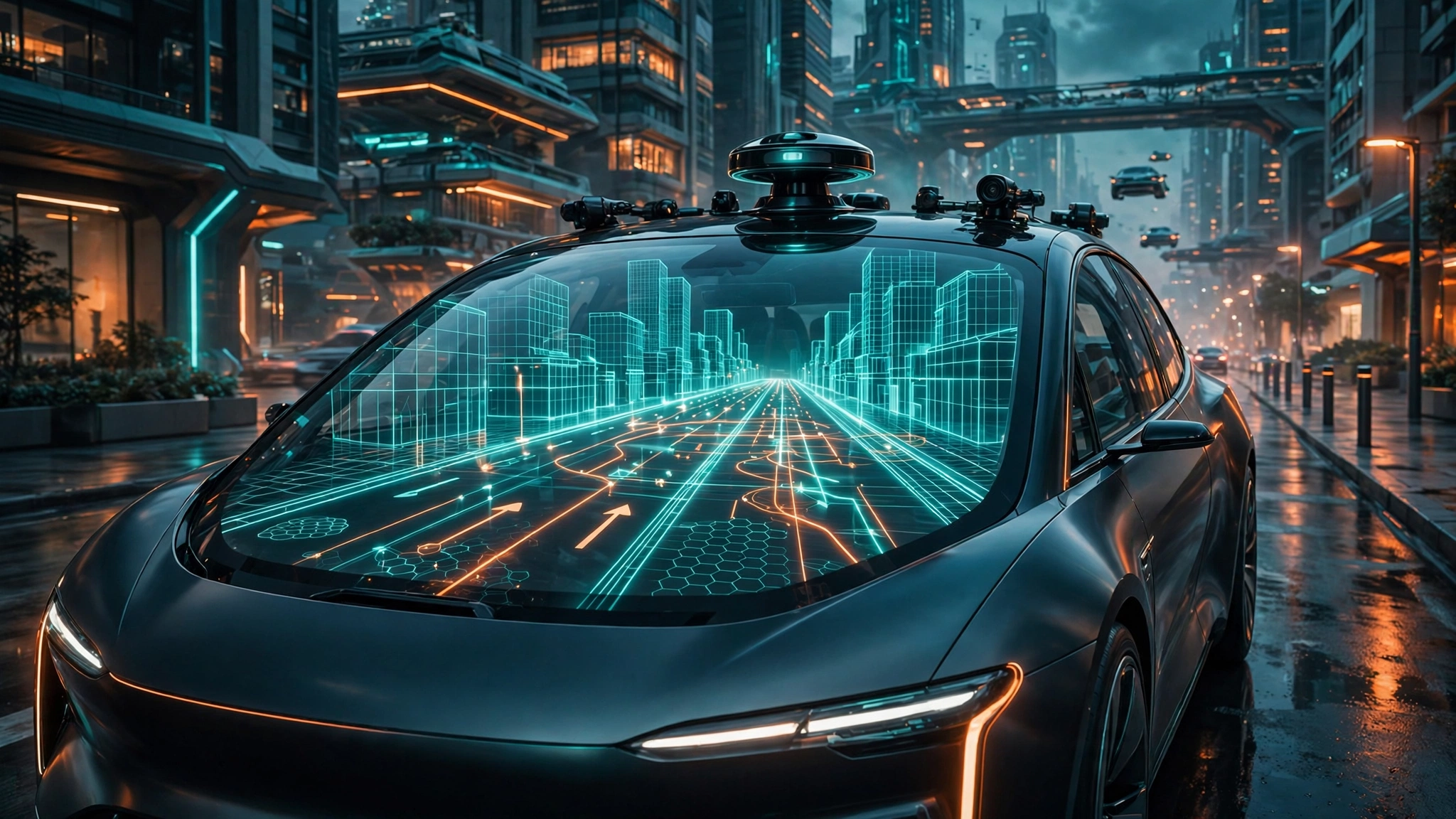
Table of Contents
What Tesla FSD v15 Changes Under the Hood
According to Tesla’s release notes, v15 upgrades every part of the end-to-end driving network. The headline change is an upgraded vision encoder shared between FSD, Robotaxi, and Optimus, trained on millions of internet videos for improved generalization and data efficiency. Tesla says that encoder improves the critical intervention rate by 25 times — the “25x better handling of safety critical cases” line that leads the company’s announcement. Navigation is now handled by an end-to-end learned model based on route preference data from the fleet, though it only covers the start and end of trips for now, with later v15 releases set to expand it to the entire route.
Parking location selection now uses personalized parking history, and the map will display multiple parking options at a destination.
Driver monitoring changes too. Tesla says it increased vision-based attention monitoring availability for drivers wearing hats and sunglasses, while decreasing strictness in higher-speed driver profiles — a curious direction at a time when sleeping drivers on FSD keep making headlines and Tesla is tightening monitoring in Europe at regulators’ request. The update also removes the disengagement menu entirely when a driver takes over, adds a Calm Mode first seen on Robotaxis, and lets drivers hide the driving visualization altogether in a full-screen map mode.
| Detail | What we know |
|---|---|
| Build | v15.0.1, in software update 2026.38.6.11 |
| Rollout began | November 21, 2026, to Early Access Program members |
| Wide release | December 2026, with the Holiday Update, according to Musk |
| Hardware required | AI4 (HW4) computer only |
| Safety claim | 25x better handling of safety-critical cases |
| Standout feature | Reality View, a live generative visualization of the drive |
Reality View: The Car Re-Renders the World
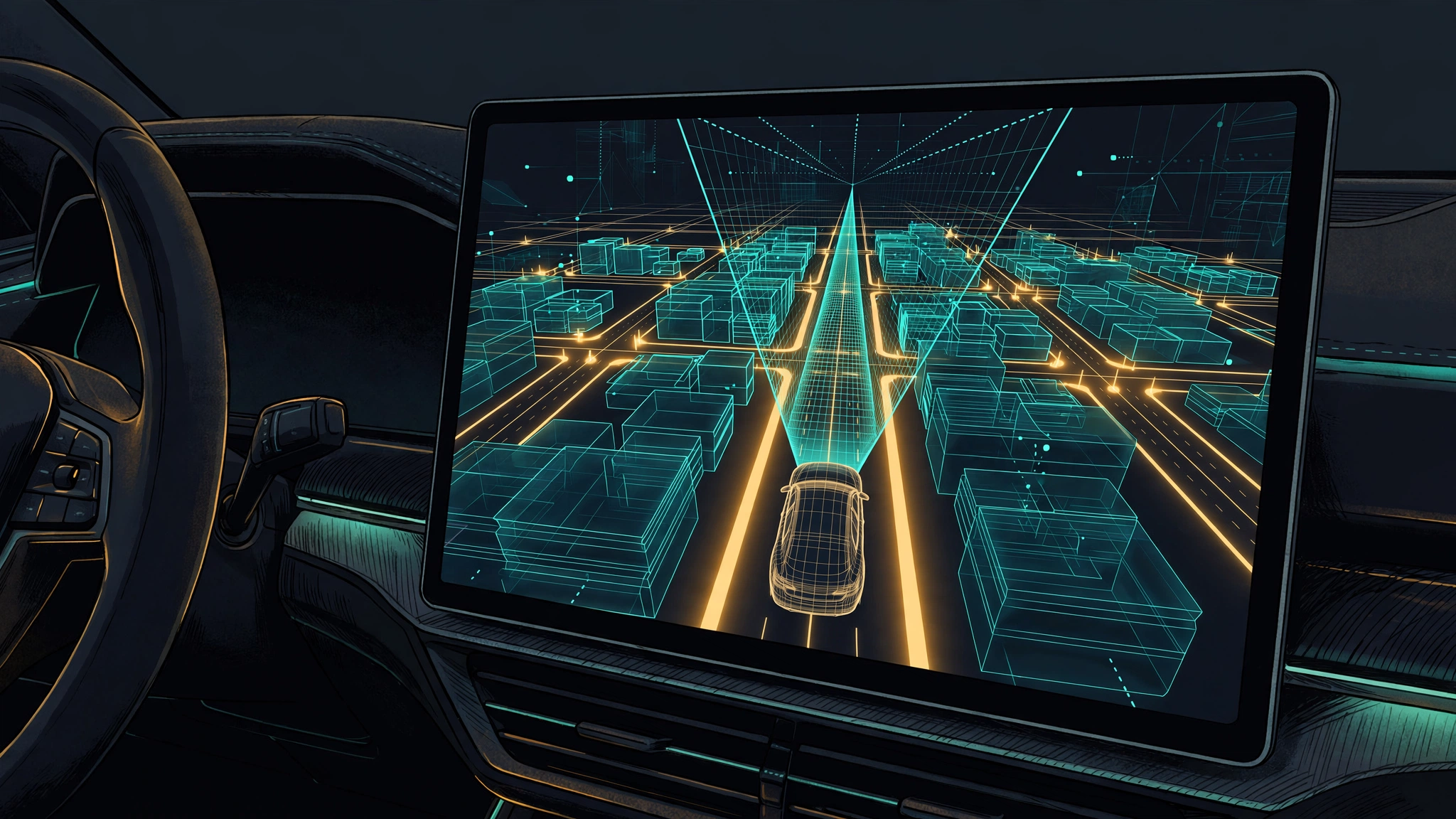
The flashiest part of the update is the new visualization. Reality View is a real-time generative driving visualization that continuously streams a view from an arbitrary virtual camera situated above the vehicle, enabling drivers to see and control what the system is planning to do. It replaces all of the explicit model signals — the boxes, lines, and icons of the old visualization — with a single end-to-end view that Tesla says uses less total compute. Drivers can choose fullscreen visualizations, maps, or a split view, or pick a quiet mode for a calming cabin experience, and upcoming navigation turns display directly inside the driving visualization.
The naming took a small detour: Tesla’s announcement calls it Reality View, while the release notes call the same feature Tesla Augmented Reality, after the company’s AI account first posted the notes under one name and reposted them under the other. Either way, the idea is the same — the screen stops showing a diagram of what the car thinks it sees and starts showing a rendered version of the street itself. If it works as advertised, supervising the system becomes far more intuitive, because a driver can see intent rather than decoding symbols. The honest caveat is structural: the rendering is itself a model output, generated by the same network that drives.
A convincing picture of the road is a claim about the road, not proof of it, and the failure mode of a fluent generator is a fluent error. That does not make the feature useless — it makes it a control surface, not a guarantee.
The Update Goes After FSD’s Weakest Spots
What stands out most is where Tesla is focusing. Almost every driving improvement in the release notes targets an area where FSD struggles today. Sign detection is first: in a test published in September by Brussels nonprofit Johanna.be, FSD exceeded the limit in 55 percent of the 30 km/h zones it drove through, averaging 44 km/h, and in most of those zones the car’s screen showed a 50 km/h limit. It had not read the sign. Potholes are next: Musk said in August that pothole avoidance was “coming soon,” something he had already promised back in 2019, and today FSD still drives straight through them. The update promises improved detection of potholes, road details, and avoidance of deep standing water.
School zones are on the list too, and not by accident. The United States National Highway Traffic Safety Administration is reviewing a petition claiming Tesla’s Robotaxis speed through active school zones, on top of an investigation it opened in October 2025 into FSD traffic-law violations like running red lights. The release notes promise improved speed handling for each driver profile, school zones and speed limits, and inclement weather. FSD can now also slow down for speed cameras, which fits the same theme — though it also suggests Tesla is fine with the system going over the limit when there is no camera around.
Smaller items round out the list: improved detection of road signs, small animals, road debris, and chains, plus a Bike Rack Mode that allows FSD to run with a bike rack or a similar hitch accessory.
The 25x Claim Deserves a Closer Look
The release notes clear up what the “25x” refers to: Tesla says the new vision encoder improves the critical intervention rate by 25 times. That is the right metric to measure progress toward unsupervised driving. But Tesla still does not share the actual number, only the multiplier, and a multiplier without the underlying number is hard to check. Electrek’s math shows why the claim matters if true: its data from earlier this year suggested FSD v14 could go a couple thousand miles between critical interventions, and a 25-times improvement on that would put v15 around 50,000 miles between critical interventions — well beyond the roughly 10,000 miles Electrek has said Tesla needs for a limited unsupervised service.
History counsels patience. FSD has never improved in a straight line. When v14 arrived in October 2025, it came with hallucinations, brake stabbing, and excessive speeding, and early crowdsourced data showed about 732 miles between critical disengagements, below what was expected. It then improved a lot. Then the v14.2 updates went backward before Musk sold v14.3 as the version where “the last big piece of the puzzle finally lands.” Seven months and a long string of point releases later, owners are still supervising, and Tesla now needs v15 to deliver what v14.3 was supposed to.
There is reason for some optimism: Tesla told JPMorgan in August that v15 is a “step-change” built on seven core technologies, with about 40 percent of them already running in the Robotaxi fleet in Austin. But “improved detection” does not say how much better, and Tesla still will not publish the disengagement data that would settle it.
“Adds a live visualization of the drive that lets you see & control what FSD is planning to do.”
— Tesla, announcing FSD v15 on November 21, 2026, quoted by Electrek
Who Gets It, and When
Tesla FSD v15 began rolling out on November 21, 2026, to owners in its Early Access Program, delivered in software update 2026.38.6.11 for cars running the company’s HW4 computer. The wide release has a month, not a date: Musk wrote on X in the early hours of November 21 that the next major version would reach the broader fleet in December, with the 2026 Holiday Update. The company has said before that v15 is built for its AI4 computer, and Musk said on the first-quarter earnings call in April that Hardware 3 “simply does not have the capability to achieve unsupervised FSD.” Owners on older hardware should not expect this update.
This is the same pattern as the wider shift toward agents that act in the physical world — the same week our agentic commerce coverage looked at AI agents that buy things on your behalf, Tesla shipped an agent that drives. For the rest of the week’s developments, see yesterday’s AI news roundup.
FAQ
Is Tesla FSD v15 unsupervised driving?
No. FSD v15 is still a supervised system: the driver must supervise at all times and be ready to take over. Tesla describes the 25-times improvement as progress toward unsupervised driving, not its arrival, and no unsupervised consumer release has been announced.
Which cars can run Tesla FSD v15?
The first wave is limited to cars with Tesla’s AI4 (HW4) computer, in the Early Access Program. The wide release is planned for December 2026. Cars on Hardware 3 cannot run v15, according to Musk.
What is Reality View?
Reality View is a real-time generative visualization that streams a rendered view of the road from a virtual camera above the car, replacing the old icon-based display. It lets the driver see what FSD is planning to do, with fullscreen, map, split-view, and quiet-mode options.
The Bottom Line
Tesla FSD v15 is the most focused Full Self-Driving update in years, and the focus is exactly right: the signs, potholes, school zones, and debris that owners complain about and regulators investigate. Reality View is genuinely impressive on video and could make supervision meaningfully easier. The question is the driving, not the visuals — whether the 25-times claim survives contact with real roads, and whether this version breaks the two-steps-forward, one-step-back pattern of every major FSD release before it. The first wave of owners will answer that within weeks. Until then, the honest verdict is the one the release notes invite: promising, targeted, and unproven.
Sources