

Jensen Huang resigns as president, chief executive and board member of Nvidia, effective Thursday, November 12, 2026, ending a 33-year run at the company he co-founded in a Denny’s restaurant in 1993. The board named longtime chief financial officer Colette Kress as interim chief executive, appointed its first-ever board chair, and opened a search for a permanent successor — all in the same week the chipmaker’s shares lost roughly $573 billion in market value. For the company at the centre of the AI boom, the question is no longer whether the transition hurts, but how long the damage lasts.
Table of Contents
The Week That Ended a 33-Year Run
The collapse came fast. On Sunday, November 8, Nvidia’s board said it would investigate whether Huang was the target of a foreign intelligence effort, while expressing confidence in his leadership and saying it did not believe company secrets or national security had been compromised. The same day, Huang admitted to an extramarital affair in a staff-wide memo, without naming the other party. Within days, reports surfaced of at least one additional extramarital relationship, and of growing national security concerns on Capitol Hill. On Wednesday, The Wall Street Journal reported that the board was preparing to oust Huang. The board convened on Wednesday night to weigh his future, and he was out the next morning.
Neither Nvidia’s press release nor its Form 8-K filing with the US Securities and Exchange Commission gives a reason for the resignation, and the filing discloses no severance, separation or equity arrangements for Huang. He was not quoted in the announcement. The filing, signed by Kress as interim chief executive, dates the resignation to November 12 and confirms that Huang also left the board. What forced the board’s hand, according to CNN, was the combination of the intelligence concerns and the reports of further relationships — a rapid and stunning fall from grace for one of the most powerful men in tech, and a reversal from the board’s public confidence just four days earlier.
Who Takes Over: Kress, Jones, and the Search
Colette Kress, Nvidia’s chief financial officer since 2013, has agreed to serve as interim CEO while keeping her roles as executive vice president and CFO until a permanent successor is named. In an internal email to staff seen by The Wall Street Journal, she promised employees more information in the coming days about “our future together” and said she would host a company meeting on November 18. The board said it is starting a search for the company’s next chief executive and will consider internal and external candidates.
At the same time, the board appointed longtime director Harvey C. Jones, 73, a former Synopsys chief executive who has sat on Nvidia’s board since 1993, as its first-ever chair. The move puts the board, rather than the founder, in charge of the succession. US Treasury Secretary Scott Bessent added public pressure on Sunday, telling Fox News that Nvidia should look “outside the company” for its next leader and that the board must push a “dramatic shakeup” — Huang, he noted, famously had no succession plan. The $4 trillion firm also owes the Trump administration answers within 10 days about whether it was profiting from banned chip sales.
| Event | What happened | Why it matters |
|---|---|---|
| Resignation | Huang steps down as president, CEO and board member, effective November 12, 2026 | Ends 33 years of founder leadership at the heart of the AI boom |
| Interim CEO | CFO Colette Kress takes over, keeping her finance role | Her first earnings call without Huang comes on Tuesday, November 17 |
| Board chair | Harvey C. Jones becomes the company’s first-ever chair | The board, not the founder, now runs the succession |
| Shares | Down 12.75% in a week, about $573 billion erased | The stock is about 6% of the S&P 500, so the fall reaches retirement accounts |
| Congress | Huang called to testify in a closed-door hearing on December 1 | Lawmakers want answers on chip sales and transfers to China |
The Market Reaction: $573 Billion Gone in a Week
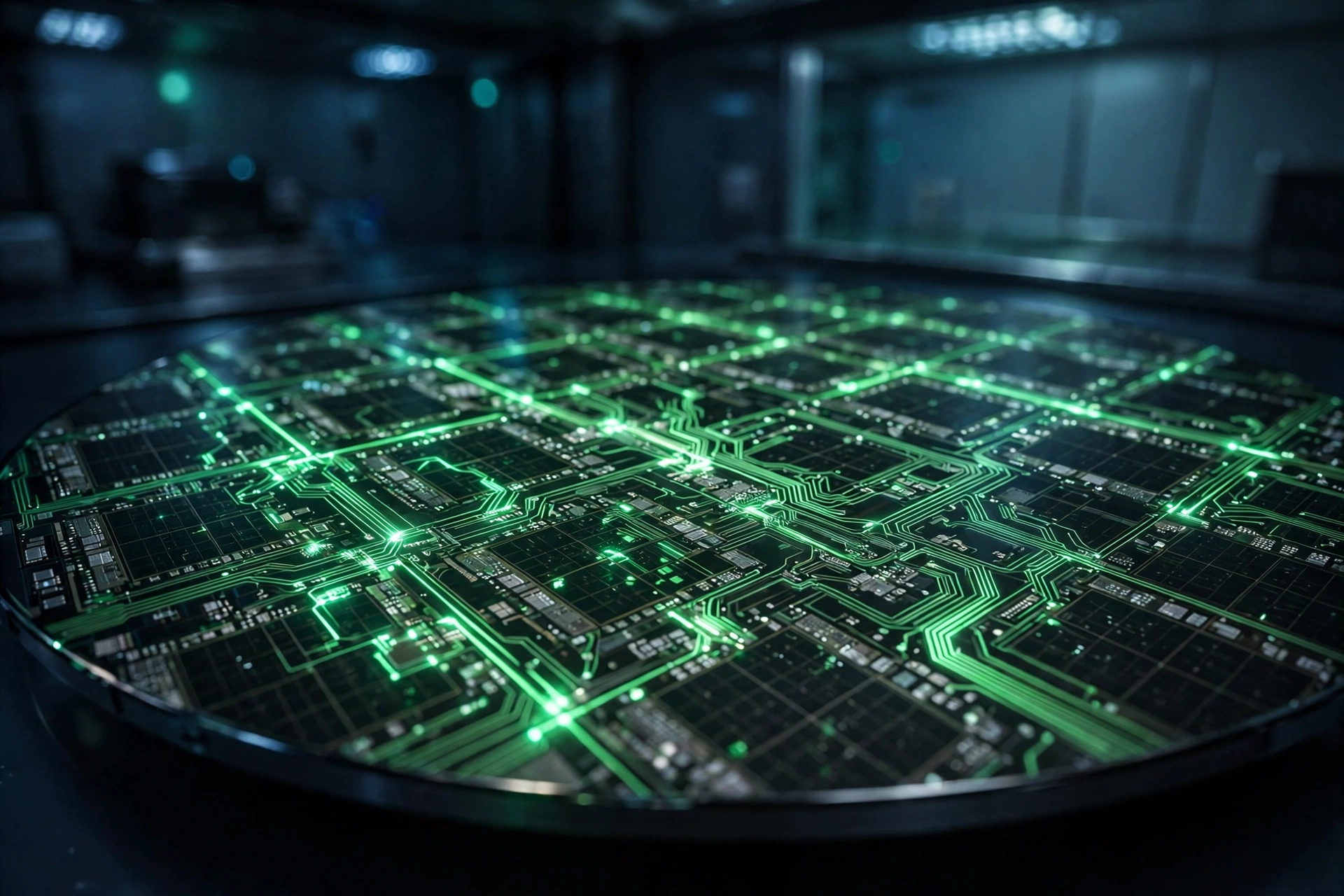
Nvidia’s stock was down about 5% in morning trading on Thursday, the day the resignation was announced, and the damage compounded through the week. As of Friday’s close, the shares had fallen 12.75% since the start of the week, erasing roughly $573 billion in market value, according to CNN. Rival AMD rose 5.9% over the same stretch, as investors priced in a weaker Nvidia rather than a weaker AI trade. The sell-off matters beyond Nvidia’s own shareholders: the company is one of the largest stocks in the S&P 500, comprising about 6% of the total value of the index, so its decline reaches deep into investment and retirement accounts.
CNN described Nvidia as the world’s second-most valuable company — a position built on selling the chips that power nearly every frontier AI model, now suddenly leaderless.
After Jensen Huang Resigns: What Happens Next
Three dates now matter more than any statement from the company. First, Nvidia reports third-quarter fiscal 2027 results on Tuesday, November 17, at about 1:20 p.m. Pacific time, with an earnings call at 2 p.m. — its first report without Huang at the helm, and the first time investors and Wall Street analysts get to question Kress directly. Second, Huang has been called to testify in a closed-door congressional hearing on December 1, and lawmakers have said they will subpoena him if he does not agree voluntarily. Commerce Secretary Howard Lutnick has agreed to testify next month before the Senate Banking Committee, which has also requested to hear from Huang.
Third, Washington is moving on the policy front. The Financial Times reported that lawmakers in both parties are moving to attach AI chip export curbs to the must-pass defense bill, after the resignation. Representatives John Moolenaar, Brian Mast and Rick Crawford — chairs of the House committees on China, Foreign Affairs and Intelligence — have asked Huang, Nvidia general counsel Tim Teter and Jeffrey Kessler, the Commerce Department’s export control chief, to appear before Congress.
The backdrop is the Megaspeed investigation: Alice Huang, the Chinese businesswoman and former executive at the Singapore-based Nvidia customer at the centre of the reports, is someone US officials have spent more than a year investigating for suspected chip smuggling to China. For a deeper look at the week’s other major AI stories, see our November AI news roundup, and for how AI is reshaping search, our report on ChatGPT taking one in five searches.
Frequently Asked Questions
Why did Jensen Huang resign?
Nvidia’s filing and press release give no reason. News reports tie the exit to reports of extramarital relationships, including one with Alice Huang, a former executive at Megaspeed whom US officials have investigated as a potential national security risk. The board has said it has no evidence that company or national-security secrets were compromised.
Who is running Nvidia now?
Colette Kress, chief financial officer since 2013, is interim CEO while keeping her CFO role. Harvey C. Jones, a director since 1993, is the board’s first-ever chair. The board is searching for a permanent chief executive and says it will consider internal and external candidates.
When does Nvidia report earnings?
Third-quarter fiscal 2027 results are due Tuesday, November 17, 2026 — the first report without Huang at the helm. The earnings call follows at 2 p.m. Pacific time.
Verdict: A Succession Problem Years in the Making
Jensen Huang resigns at the very moment Nvidia matters most — the week its chips power nearly every frontier AI model, and the week Washington starts asking harder questions about where those chips go. The company itself is not in doubt: demand for its hardware remains the engine of the AI buildout, and Kress has run its finances for over a decade. But the founder who said he did not believe in succession planning is gone with no successor named, no reason given, and a congressional hearing already on the calendar. Tuesday’s earnings call will be the first real test of whether Nvidia can be bigger than the man who built it.
“I recognize that this has been an extraordinarily difficult period.”
— Colette Kress, interim CEO of Nvidia, in an internal email to staff, as reported by The Wall Street Journal
Sources
- CNN — Nvidia’s week of chaos, explained (November 13, 2026)
- The Wall Street Journal — Jensen Huang Has Been Ousted as Nvidia CEO
- New York Post — Bessent urges Nvidia to look outside the company for a new CEO (November 15, 2026)
- Newsmax — Nvidia Scandal Fuels Bipartisan Push for AI Chip Export Curbs (November 15, 2026)
- Motley Fool — What comes next for Nvidia investors (November 15, 2026)