


This TrafixPress review looks at a WordPress plugin that turns one master article into a planned, written, and published set of up to 50 SEO articles — without ever writing the same article twice. TrafixPress launches Wednesday 9 December 2026 at 11:00 AM New York time for $37 one-time, rising to $47 after 13 December. My rating: 4.3/5.
>> Get TrafixPress at the $37 Launch Price Here
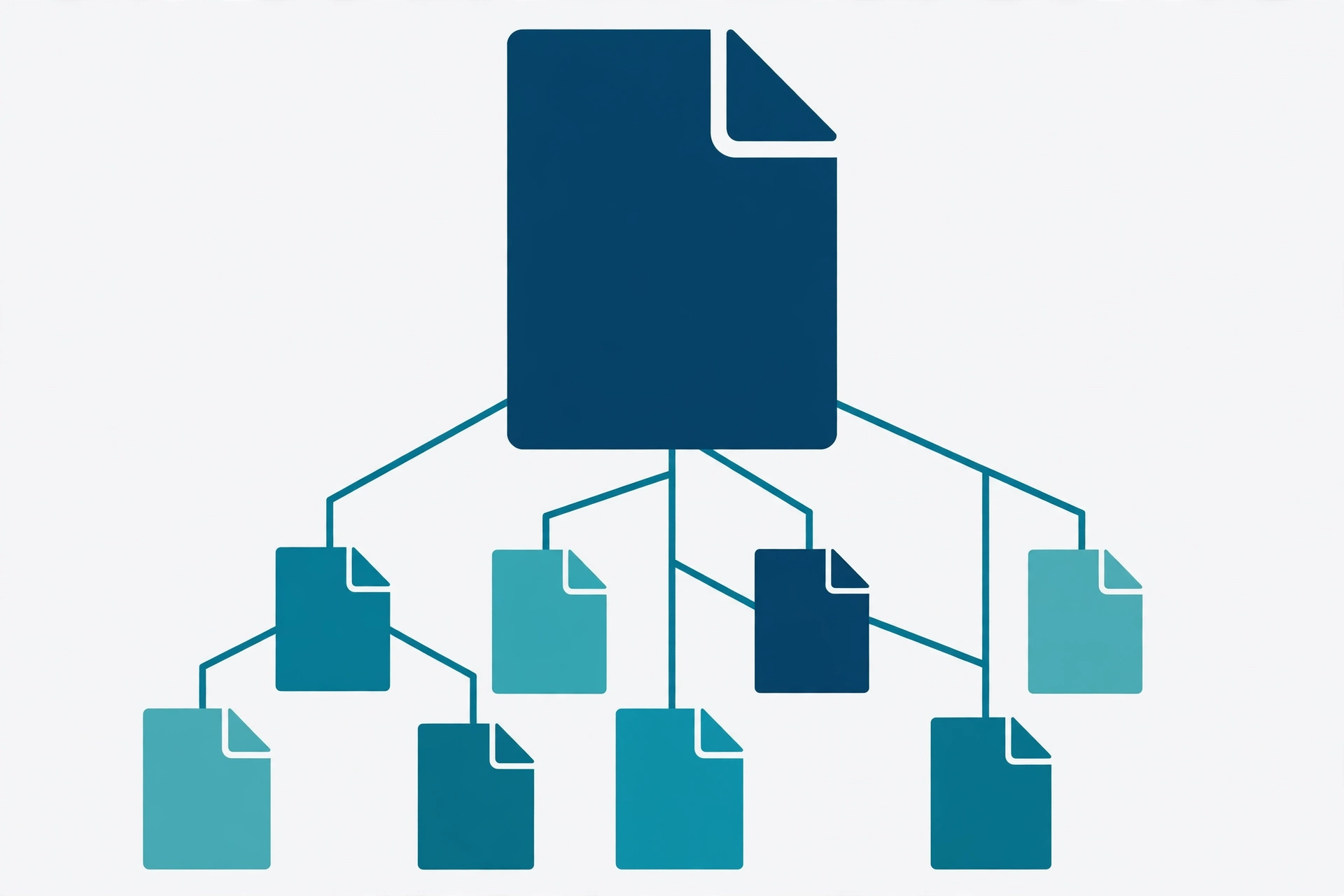
Table of Contents
What Is TrafixPress?
TrafixPress is a WordPress plugin by Emmanuel Girold that automates the boring middle of SEO content: planning, writing, and publishing supporting articles around one pillar page. You write a single master article of 1,500–2,500 words — the vendor includes a Master Article Framework that takes about 10 minutes, or you can import an existing article — and the autopilot does the rest.
The promise that matters is the anti-duplicate one. Most AI writing tools happily produce fifty articles that all say the same thing in different words, which is exactly how a site ends up competing with itself in Google. TrafixPress is built around the opposite idea: every article gets a unique angle, a unique keyword focus, and a unique internal-link path, checked by a five-point Anti-Duplicate Shield before anything is published.
One thing to know up front: TrafixPress writes with your own OpenRouter API key, and you pay OpenRouter directly at cost — around $0.01–$0.05 per article. The vendor’s JVZoo message is explicit about this, and it is the wording this review uses. The sales page also says “no API key — TrafixPress supplies its own”, which conflicts with the pricing page; until the vendor clears that up, assume you need your own key.
How the TrafixPress Autopilot Works (3 Steps)
Step 1 — Plan. The autopilot reads your master article, finds the keywords it already deserves to rank for, and plans up to 50 articles. You see the whole plan first and can add, remove, or edit any article before approving it, in batches of 1–10.
Step 2 — Write. Each article is written with a unique angle: 1,000–1,200 words, 5 headings, 5 internal links, 2 external links, an SEO title of 55–60 characters, a meta description of 150–160 characters, and an FAQ block. No lorem ipsum, no filler, and — the vendor stresses — it is not a content spinner: the site owner supplies the real facts, and the system writes new articles from those facts instead of copying from the internet.
Step 3 — Publish. One click sets the schedule — every day, every 2 days, weekly, or on specific days — as drafts or live posts. The autopilot keeps publishing until the plan is done, then stops. Nothing drips forever.

TrafixPress Review: Key Features Worth Noting
- Anti-Duplicate Shield (5 checkpoints) — duplicate-intent check, overlap check, unique angle, unique keyword focus, and unique internal-link path, applied to every article before it is written.
- Internal-link silo built automatically — every article links to the master article and to related articles, and every article also receives a link, so the cluster holds together instead of scattering.
- Plan up to 50 articles per master article — with full plan approval: add, remove, edit, or approve before a single word is written.
- Eight AI models to choose from — Gemini 2.5 Flash Lite, Claude Haiku 4.5, GPT-5-mini, DeepSeek Chat, Llama 4 Maverick, Qwen3 235B, Grok 4.1 Fast, and Mistral Medium 3.1, via OpenRouter.
- SEO structure in every article — SEO title, meta description, FAQ block, 5 headings, 5 internal links, 2 external links, all generated per article.
- One-time payment, no subscription — and TrafixPress itself never charges per article; the only per-article cost is OpenRouter at cost.
- Pro adds an audit of your existing articles, a coverage map, an inbound-link list, and Search Console data — the tools that tell you what to write next.
- Agency adds a REST API, your own writing styles, and client sites — built for people who run sites for others.
Who Is TrafixPress For?
- WordPress site owners and bloggers who want a real content cluster without writing every supporting article by hand
- Niche-site builders who already have one strong pillar page and need the 20–50 articles around it
- SEOs and agencies managing several WordPress sites and tired of duplicate-content risk from AI writers
- Anyone who has been burned by AI content tools that produced fifty near-identical posts
It is not for you if you do not run WordPress — this is a WordPress plugin, nothing else. It is also not for you if you want the tool to invent your expertise: the master article is yours to write, and the autopilot builds from your facts. And if you expect any tool to guarantee Google rankings, stop here — the vendor explicitly tells affiliates not to promise rankings, traffic, or income, and this review will not either. If you want a broader look at AI writing tools first, see the Best AI Writing Assistants in 2026 pillar and my Surfer SEO Review.

TrafixPress Pricing
- Front End: Starter — $37 one-time (launch price until 13 December, then $47). 1 site, full autopilot, Anti-Duplicate Shield, up to 50 articles per plan, 1 master article, scheduled publishing, dashboard.
- Upgrade 1: Pro — $50 one-time in the funnel (standalone price $97). 3 sites, everything in Starter plus audit of existing articles, coverage map, inbound-link list, and Search Console data.
- Upgrade 2: Agency — $400 one-time in the funnel (standalone price $497). Unlimited sites, everything in Pro plus REST API, your own writing styles, and client sites allowed.
- Full funnel details, with my take on each upgrade, are in my TrafixPress OTO breakdown.
- AI cost: your own OpenRouter key, around $0.01–$0.05 per article at cost — TrafixPress charges nothing per article.
- Refund policy: 14-day guarantee — full refund if TrafixPress does not do what it promises, stated on the sales and pricing pages.
>> Claim the $37 Launch Price Before 13 December
Pros and Cons (Honest)
Pros
- The anti-duplicate idea is the right problem to solve — most AI writers create cannibalisation, and this one is engineered against it with five explicit checks
- Plan approval before writing: you see all 50 articles first, which is how a cluster should be built
- Internal-link silo is automatic and bidirectional — every article links out and receives a link
- One-time pricing with no subscription and no per-article charge from the vendor; the AI cost is transparent at-cost OpenRouter pricing
- Eight model choices via OpenRouter, so you are not locked to one provider’s quality or price
- Clear funnel and affiliate rules published before launch, 14-day guarantee, instant JVZoo approval
Cons
- The API-key story is contradictory: the sales page says no key is needed while the pricing page and the vendor’s own JVZoo message say you use your own OpenRouter key — buyers should assume the key is required
- The quality ceiling is your master article: weak facts in, weak cluster out, and the autopilot cannot invent expertise you do not have
- WordPress only — no support for other platforms, and no mention of multilingual clusters beyond the English and French sales pages
- No hands-on review access before launch — the writing quality and the Shield’s real effectiveness cannot be verified until buyers run it on 9 December
- No vendor bonuses and no JV contest — the offer is the plugin itself, with no extras to sweeten the front end
- Rankings are not guaranteed by any tool, and the vendor is right to forbid that claim — treat the “SEO autopilot” label as workflow automation, not a ranking promise
FAQ
When does TrafixPress launch?
Wednesday 9 December 2026 at 11:00 AM New York time. The $37 launch price runs until 13 December, then rises to $47.
Is TrafixPress a subscription?
No. All three tiers are one-time payments. The only ongoing cost is OpenRouter usage at cost, around $0.01–$0.05 per article.
Do I need my own API key?
The pricing page and the vendor’s JVZoo message say yes — your own OpenRouter key, paid at cost. The sales page says otherwise; this review follows the vendor’s own affiliate instruction.
How many articles can it write?
Up to 50 articles per plan from one master article, each 1,000–1,200 words with its own angle, keyword focus, and internal-link path.
Does it work on any website?
No — TrafixPress is a WordPress plugin. It runs on WordPress sites only.
Can I get a refund?
Yes — the sales and pricing pages state a 14-day guarantee with a full refund if the plugin does not do what it promises.
Is there an upsell funnel?
Yes: Pro ($50 in the funnel, $97 standalone) and Agency ($400 in the funnel, $497 standalone). My full breakdown is in the TrafixPress OTO article.
TrafixPress Review Verdict
In this TrafixPress review, I found a plugin aimed at the one failure mode that actually kills AI content sites — fifty articles saying the same thing — and its plan-approve-write-publish loop with a five-point duplicate shield is a serious answer to it. One-time pricing, transparent at-cost AI usage, and a plan you approve before anything is written all point the right way.
The honest trade-off is the key confusion and the facts ceiling. Assume you need your own OpenRouter key until the vendor fixes the sales page, and remember the cluster is only as good as the master article you feed it. If you run WordPress sites and already have a strong pillar page waiting for its cluster, it is worth it at the $37 launch price. If you have no pillar content yet, write that first — and compare notes with my Frase Review and the Best AI Writing Assistants in 2026 pillar before you decide.
Rating: 4.3/5 — Recommended at the $37 launch price for WordPress owners with a pillar page ready, with writing quality still to prove on launch day.
>> Get TrafixPress at the $37 Launch Price Here
P.S. The cart opens Wednesday 9 December at 11:00 AM New York time, and the $37 price ends 13 December. This TrafixPress review will be updated after launch day with what buyers actually find inside the plugin.
Affiliate Disclosure: This is an independent review. If you buy through links on this page, I may earn a commission at no extra cost to you. My ratings are based on hands-on research of the official JV documentation and the vendor’s product pages — including the flaws I found.