
Fish Audio is one of the most talked-about AI voice platforms of 2026, and for good reason: it turns text into expressive, human-sounding speech, clones a voice from a short audio sample, and does it all at a price that undercuts most big-name rivals. Built on the open-source Fish Speech models, it has grown a community library of more than 2 million voices and earned a strong 4.5 out of 5 rating on G2. But is it the right voice tool for your videos, audiobooks, or apps? In this Fish Audio review, we break down its features, pricing, pros and cons, so you can decide with confidence.
Table of Contents
What Is Fish Audio?
Fish Audio is an AI voice platform for text-to-speech (TTS) and voice cloning, developed by Fish Audio, Inc. (Hanabi AI Inc.). Its hosted flagship model, S2.1-Pro, converts written text into natural, emotionally expressive speech, supports multi-speaker dialogue, and can clone a voice from as little as 10 to 15 seconds of reference audio.
The platform grew out of the open-source Fish Speech project, which means its underlying models are publicly available on GitHub and Hugging Face for developers who want to self-host. The hosted version at fish.audio adds a web playground, a community voice library, team seats, and a developer API on top of those models.
Fish Audio is designed for content creators, educators, audiobook producers, and developers building voice features into apps and voice agents. If you need narration for YouTube videos, character voices for games and animation, or a low-latency TTS API, it is squarely aimed at you. For a broader look at the category, see our guide to the best AI voice generators in 2026.
Key Features
Expressive Text-to-Speech With Emotion Control
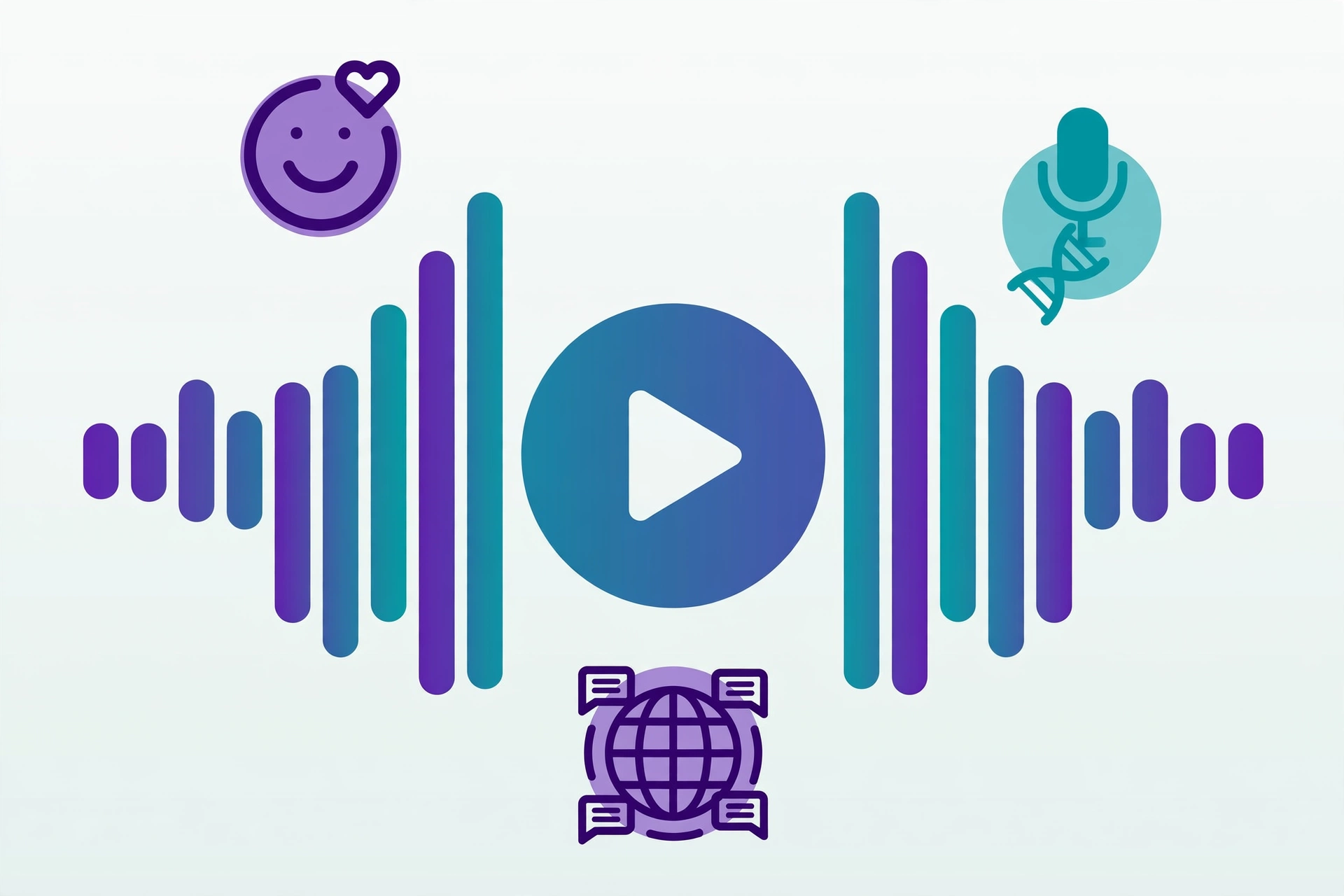
Fish Audio’s standout feature is how much control it gives you over delivery. The S2.1-Pro and S2-Pro models interpret natural-language bracket tags in your script, so writing [whispers sweetly] or [laughing nervously] actually changes how the line is spoken. The older S1 model uses a different system of parenthetical cues, such as (whispering) or (sarcastic), with 64+ supported expressions. This makes Fish Audio a strong fit for storytelling, character dialogue, and audiobooks, where flat narration quickly sounds robotic.
Voice Cloning From a Short Sample
You can clone a voice from roughly 10 to 15 seconds of clean reference audio. Paid plans add professional clone slots for higher-fidelity replicas, and voices can be kept private, unlisted, or shared publicly. As with any cloning tool, you should only clone your own voice or a voice you have explicit permission to use.
Multi-Speaker Dialogue
S2.1-Pro supports multi-speaker, multi-turn generation, so you can script a conversation between several characters in a single generation. This is a genuine advantage for podcasts, drama-style content, and explainer videos with back-and-forth dialogue.
83 Languages
According to Fish Audio’s official documentation, S2.1-Pro supports 83 languages and S2-Pro supports 80+, both with automatic language detection. The older S1 model supports 13 languages. English, Chinese, Japanese, Korean, French, German, Arabic, and Spanish are among the best-supported languages. One caveat: the API bills by UTF-8 bytes, so non-Latin scripts such as Chinese, Japanese, and Korean cost more per word than English.
Community Voice Library
Fish Audio hosts a community library of more than 2 million public voices, so you can often find a ready-made voice for a project without cloning one yourself. Free users get 3 public voice slots; paid plans unlock unlimited public slots plus private and professional slots.
Speech-to-Text and Extra Tools
Beyond TTS, Fish Audio offers speech-to-text transcription (the transcribe-1-pro model handles recordings up to 60 minutes, including multi-speaker conversations with speaker labels and timestamps), a Voice Design tool that generates voices from a text prompt, a voice changer, and audio translation. These extras make it more of an all-round voice toolkit than a single-purpose TTS app.
Developer API and Low Latency
Developers get a REST API and WebSocket streaming, plus Python and JavaScript/TypeScript SDKs. Fish Audio’s S2 technical report cites a time-to-first-audio below 100 ms for its streaming inference engine, which matters for real-time voice agents. API access is pay-as-you-go with no monthly minimum, and a free s2.1-pro-free model is available for development and testing under a fair-use policy.
Fish Audio Pricing and Plans
Fish Audio separates web subscriptions from API billing. Web plans are charged monthly in credits, and unused credits reset each billing cycle and do not roll over. Prices below are the standard list prices shown on Fish Audio’s plan page in October 2026; always confirm current pricing at checkout, as promotional offers appear from time to time.
| Plan | Price | Credits / Month | Approx. Generation | Highlights |
|---|---|---|---|---|
| Free | $0 | 8,000 | ~7 minutes | 500 characters per generation, 3 public voice slots, personal non-commercial use |
| Plus | $15/month ($11/month billed annually) | 250,000 | ~200 minutes | 15,000 characters per generation, unlimited public + 10 private voice slots, 1 professional voice slot, commercial use |
| Pro | $100/month ($75/month billed annually) | 2,000,000 | ~1,620 minutes | 30,000 characters per generation, unlimited voice slots, 5 professional voice slots, 3 team seats |
| Max | $999/month ($749/month billed annually) | 25,000,000 | ~6,250 minutes | 15 professional voice slots, 10 team seats, priority generation |
| Enterprise | Custom | — | — | Volume pricing, zero data retention, on-premise options |
API pricing: TTS models s2.1-pro, s2-pro, and s1 cost $15 per million UTF-8 bytes, which Fish Audio says is roughly 180,000 English words or about 12 hours of speech. Speech-to-text (transcribe-1) costs $0.36 per audio hour, and Voice Design costs $0.01 per successful request. Fish Audio also launched Drama 3, a newer expressive flagship model, in October 2026 at a higher list price, with an introductory discount running through November 12, 2026.
For context, that $15-per-million API rate is dramatically cheaper than some leading rivals: ElevenLabs charges around $80 per million characters for its flagship API model. Fish Audio is one of the best-value TTS APIs on the market today, especially for high-volume English narration.
Pros and Cons
Pros
- Excellent value: The API rate of $15 per million UTF-8 bytes and a Plus plan at $15/month make it far cheaper than most premium voice tools.
- Genuinely expressive speech: Natural-language emotion tags and multi-speaker dialogue produce narration that sounds acted, not read.
- Fast voice cloning: A usable clone from just 10 to 15 seconds of audio, with professional slots on paid plans.
- Huge voice library: More than 2 million community voices to browse and use.
- Open-source roots: Fish Speech models are open on GitHub and Hugging Face, so developers can self-host if the hosted service is not enough.
- Low-latency API: Streaming TTS with sub-100 ms time-to-first-audio suits real-time voice agents.
- Strong user ratings: 4.5 out of 5 on G2 across 120+ reviews, with users praising natural voice quality and ease of use.
Cons
- Very limited free tier: 8,000 credits (about 7 minutes) per month, a 500-character cap per generation, and personal non-commercial use only. It is a trial, not a workable free plan.
- Credits do not roll over: Unused credits expire each month, so light months still cost the full subscription.
- Non-Latin languages cost more: Because API billing counts UTF-8 bytes, Chinese, Japanese, and Korean text costs more per word than English.
- Long-script consistency issues: G2 reviewers report that voice consistency can drift in longer scripts, sometimes requiring multiple generations to get the best result.
- Occasional glitches: Some users report audio glitches and API bugs, and free users face strict concurrency limits.
- Two billing systems to learn: Web subscriptions and API usage are billed separately, which can confuse newcomers budgeting a project.
- Older S1 model is a legacy choice: S1 supports only 13 languages and uses a different emotion-tag syntax, so new projects should start on S2.1-Pro.
Who Is Fish Audio Best For?
- YouTubers and content creators: The Plus plan’s ~200 minutes a month covers a steady publishing schedule at a very low cost, and emotion tags make narration sound far less robotic than budget TTS tools.
- Audiobook and podcast producers: Multi-speaker dialogue and expressive delivery suit long-form storytelling, though long scripts may need a few regeneration passes.
- Developers and startups: The pay-as-you-go API with no monthly minimum, plus a free development model, makes it one of the cheapest ways to add quality voice to an app or agent.
- Indie game developers and animators: Character voices from a short clone sample, plus a huge community library, are ideal for prototyping dialogue.
Fish Audio is less ideal if you need a generous free tier, if you primarily generate non-Latin languages at high volume (where byte-based billing adds up), or if you want an all-in-one video production suite. For a polished studio-style alternative, compare Murf AI, which focuses more on presentation and video workflows.
Frequently Asked Questions
Is Fish Audio free?
Yes, there is a free tier with 8,000 credits per month (about 7 minutes of generation), a 500-character limit per generation, and instant voice cloning. However, the free plan is intended for personal, non-commercial use. Commercial rights come with the paid plans, starting at $15/month.
How much does Fish Audio cost?
Paid web plans start at $15/month for Plus ($11/month billed annually), $100/month for Pro ($75/month annually), and $999/month for Max ($749/month annually). The developer API is pay-as-you-go at $15 per million UTF-8 bytes for TTS, with no monthly minimum.
How many languages does Fish Audio support?
The flagship S2.1-Pro model supports 83 languages and S2-Pro supports 80+, both with automatic language detection. The older S1 model supports 13 languages.
How long does voice cloning take?
Fish Audio can create a usable voice clone from as little as 10 to 15 seconds of clean reference audio. Higher-fidelity professional clones are available as slots on paid plans.
Is Fish Audio better than ElevenLabs?
It depends on your priority. Fish Audio is far cheaper (about $15 vs $80 per million characters via API) and offers open-source models and a huge community voice library. ElevenLabs remains the reference for ultra-realistic studio voices and has a more mature dubbing and voice-agent ecosystem. For budget-conscious creators and developers, Fish Audio is the stronger value; for top-end commercial voice work, ElevenLabs is still worth comparing.
Verdict
Fish Audio is one of the best-value AI voice platforms available in 2026. Its expressive, emotionally controllable speech, fast voice cloning, multi-speaker dialogue, and 83-language support would be impressive at twice the price; at $15 a month for creators and $15 per million characters via API, it is a genuine bargain. The free tier is too small for real work, credits expire monthly, and long scripts can need a few retries, but these are fair trade-offs at this price point.
If you create narrated content regularly or you are building a voice feature into an app, Fish Audio deserves a place at the top of your shortlist. Start on the free tier to test the voices, then move to Plus when you are ready for commercial use.
Rating: 4.5 out of 5 stars.